Mostrando entradas con la etiqueta IDIOMS. Mostrar todas las entradas
Mostrando entradas con la etiqueta IDIOMS. Mostrar todas las entradas
miércoles, 6 de abril de 2016

martes, 15 de marzo de 2016

jueves, 19 de noviembre de 2015

viernes, 4 de octubre de 2013
viernes, 17 de mayo de 2013
BUNGHOLE OF THE WEEK: HOBSON'S CHOICE
Two options: take it or leave it; that's 'Hobson's choice'. The expression is best known in the UK, but became used worldwide following the successful eponymous 1954 film starring Charles Laughton.
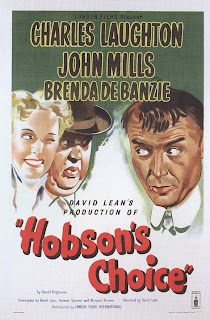
There is a story that this expression comes from a Mr. Hobson who hired out horses and gave his customers no choice as to which horse they could take. This has all the credentials of a 'folk etymology' myth but, in this case, the derivation is correct.
A search of Google returns several thousand hits for 'Hobbesian choice'. The mistaken uses of that phrase, in place of the correct 'Hobson's choice', originate from a confusion between the celebrated philosopher Thomas Hobbes (who, incidentally, was the originator of another commonplace phrase - 'nasty, brutish and short') and the less well-known carrier Thomas Hobson, to whom the phrase refers.

Thomas Hobson (1545–1631) ran a thriving carrier and horse rental business in Cambridge, England, around the turn of the 17th century. Hobson rented out horses, mainly to Cambridge University students, but refused to hire them out other than in the order he chose. The choice his customers were given was 'this or none'; quite literally, not their choice but Hobson's choice. The phrase was already being described as proverbial less than thirty years after Hobson's death. The Quaker scholar Samuel Fisher referred to the phrase in his religious text, The Rustick's Alarm to the Rabbies, 1660:
The Spectator, No. 509, 1712, explained how Hobson did business, which shows clearly how the phrase came into being:
After his death in 1631, Hobson was remembered in verse by no less a figure than John Milton, saying "He had bin an immortall Carrier". That seems rather a strange thing to say just after he had died. Eighty-six was a very good innings in the 17th century, but hardly immortality.
The phrase was still well enough known in the 20th century for 'hobsons' to be adopted then as Cockney rhyming slang for 'voice'. It has no connection with the similar sounding 'Hobson-Jobson', which derived as a corruption by British soldiers in India of the Arabic street cry 'Yā Ḥasan! Yā Ḥusayn!' = 'O Hasan! O Husain!'' (Hasan and Husain were grandsons of Muhammad).
The most celebrated application of Hobson's choice in the 20th century was Henry Ford's offer of the Model-T Ford in 'any colour you like, so long as it's black'.

From: http://www.phrases.org.uk/meanings/hobsons-choice.html

There is a story that this expression comes from a Mr. Hobson who hired out horses and gave his customers no choice as to which horse they could take. This has all the credentials of a 'folk etymology' myth but, in this case, the derivation is correct.
A search of Google returns several thousand hits for 'Hobbesian choice'. The mistaken uses of that phrase, in place of the correct 'Hobson's choice', originate from a confusion between the celebrated philosopher Thomas Hobbes (who, incidentally, was the originator of another commonplace phrase - 'nasty, brutish and short') and the less well-known carrier Thomas Hobson, to whom the phrase refers.

Thomas Hobson (1545–1631) ran a thriving carrier and horse rental business in Cambridge, England, around the turn of the 17th century. Hobson rented out horses, mainly to Cambridge University students, but refused to hire them out other than in the order he chose. The choice his customers were given was 'this or none'; quite literally, not their choice but Hobson's choice. The phrase was already being described as proverbial less than thirty years after Hobson's death. The Quaker scholar Samuel Fisher referred to the phrase in his religious text, The Rustick's Alarm to the Rabbies, 1660:
"If in this Case there be no other (as the Proverb is) then Hobson's choice ... which is, chuse whether you will have this or none."
"He lived in Cambridge, and observing that the Scholars rid hard, his manner was to keep a large Stable of Horses, ... when a Man came for a Horse, he was led into the Stable, where there was great Choice, but he obliged him to take the Horse which stood next to the Stable-Door; so that every Customer was alike well served according."
The most celebrated application of Hobson's choice in the 20th century was Henry Ford's offer of the Model-T Ford in 'any colour you like, so long as it's black'.

From: http://www.phrases.org.uk/meanings/hobsons-choice.html
lunes, 13 de mayo de 2013
BUNGHOLE OF THE WEEK: TO CUT THE MUSTARD
This phrase is from a metaphor where the mustard is something that adds flavor or zest to life, something that is good. Something that cuts the mustard is very good.
The phrase dates at least 1898. From the Decator, Illinois Herald Despatch of 6 April of that year:
John J. Graves, tight but that he can’t cut the mustard.
Mustard has a long history of being used as a metaphor for something powerful or biting. First in a negative context, as in John Heywood’s A Dialogue Conteinyng the Nomber in Effect of All the Prouerbes in the Englishe Tongue (1546):
Where her woordes seemd hony,...Now are they mustard.
And somewhat later in a positive sense. From James Howell’sLexicon Tetraglotton (1659):
As strong as Mustard.
The origin of the cut portion of the phrase is uncertain. It could be a reference to cutting a mustard seed, a very difficult task. Or it could be a conflation with a cut above, to cut the mustard is to be better than mustard.
The phrase is also rendered as to be the mustard and it’s very similar to keen as mustard.
Various explanations that it is a corruption of a military phrase to cut muster or that mustard is a difficult crop to harvest have no evidence to support them.

miércoles, 1 de mayo de 2013
BUNGHOLE OF THE WEEK: LAME DUCK
MEANING
A person or thing that isn't properly able to function, especially one that was previously proficient.
ORIGIN
The description of 'lame duck' is often applied to politicians who are known to be in their final term of office, when colleagues and electors look toward a successor. It is also sometimes used to describe office-holders who have lost an election but have not yet left office.
In recent years (as of 2006) both George W. Bush and Tony Blair, unable to see out further electoral victories, have been faced with such mutterings, for example:
In May 2006, The Washington Post ran an article titled 'Bush's Political Capital Spent', including the opinion:"Such weakness has unleashed the first mutterings of those dreaded second-term words, 'lame duck'."In April 2006, The [London] Times ran an article titled:"Is Blair a 'lame-duck' Prime Minister?"
US presidents have long suffered this fate, partly due to the electoral rules in America, which limit the number of terms that a president may serve, and the USA is where the phrase originates when applied to politicians. The Congressional Globe entry for 14 January 1863 has:
In no event could it be justly obnoxious to the charge of being a receptacle of ‘lame ducks’ or broken down politicians.
Historians now describe various 19th century US presidents as 'lame ducks'. The first such description of a US president I can find which was written while he was still in office isn't until 1926 though, and relates to Calvin Coolidge. The Wisconsin newspaper, the Appleton Post-Crescent ran a piece titled, 'Making a lame duck of Coolidge', in May 1926:
"... the voting in other Republican states should hinge pretty largely on the issue whether Mr. Coolidge shall be permitted to become a lame duck president for the final two years of his term."
The actual origin of the term is nothing to do with politics though and is quite specific in meaning. It comes from the London Stock Market and referred to investors who were unable to pay their debts. In Horace Walpole'sLetters to Sir Horace Mann, 1761, we have:
"Do you know what a Bull, and a Bear, and a Lame Duck are?"
In 1771, David Garrick, in Prologue to Foote's Maid of Bath wrote:
"Change-Alley bankrupts waddle out lame ducks!"
In 1772, the Edinburgh Advertiser included:
"Yesterday being the settling day for India stock, the bulls had a balance to pay to the bears to the amount of 23 per cent. Only one lame duck waddled out of the alley, and that for no greater a sum than 20,000."
We are still familiar with the terms 'bull market' and 'bear market', referring to rising and falling markets respectively, but 'lame duck' in the specifically stock trading context is now little used.
Why should someone who has no assets be called a 'duck'? Could it be related to the cricketing term, 'out for a duck' - used when a batman is out without scoring any runs? It seems not. That term is much later and refers to the zero on the scoreboard being similar to a duck's egg. First used in 1867, in G. H. Selkirk's Guide to Cricket Grounds:
"If he makes one run he has 'broken his duck's egg'."

martes, 6 de diciembre de 2011
SHAKESPEARE'S COINED WORDS AND IDIOMATIC EXPRESSIONS

One fell swoop: Suddenly; in a single action
In my mind’s eye: One's visual memory or imagination
A countenance more in sorrow than in anger: a person or thing that is viewed more with sadness than with anger.
To be in a pickle: In a quandary (dilemma) or some other difficult position.
Bag and baggage: All of one's possessions.
Vanish into thin air: Disappear without trace.
Not budge an inch: to refuse to change your opinion or agree to even very small changes that another person wants
Play fast and loose: Be inconstant and unreliable.
To be led down the primrose path: idiom suggesting that one is being deceived or led astray, often by a hypocrite. The primrose path also refers to someone living a life of luxury apparently linking primroses to libertine indulgence.
The milk of human kindness: Care and compassion for others.

Remembrance of things past: records the decay of a society.
To thine own self be true: be true to yourself
Cold comfort: if something someone tells you to make you feel better about a bad situation is cold comfort, it does not make you feel better
To beggar all description: to defy description; to be unable to be described
Salad days: The days of one's youthful inexperience.
Flesh and blood: the quality of being alive; one's own relatives; one's own kin
Foul play: Dishonest or treacherous behaviour; also violent conduct.
Tower of strength: a person who can always be depended on to provide support and encouragement, especially in times of trouble
To be cruel to be kind: something that you say when you do something to someone that will upset them now because you think it will help them in the future
Eat (somebody) out of house and home: to eat most of the food that someone has in their house.
Pomp and circumstance: formal ceremony.
Foregone conclusion: Cliché a conclusion already reached; an inevitable result.
Full circle: Back to one's starting point
Method in the madness: If there's method in someone's madness, they do things in a strange and unorthodox way, but manage to get results.
Neither rhyme nor reason: Cliché without logic, order, or planning. (Describes something disorganized. *Typically: be ~; have ~.)
It smells to (high) heaven: to smell very bad
A sorry sight: A regrettable and unwelcome aspect or feature. Now also used to mean something or someone of untidy appearance.
Strange bedfellows: unexpected partners.

sábado, 19 de marzo de 2011
SITTING ON A FENCE

Since I was young I've been very hard to
please
And I don't know wrong from right
But there is one thing I could never
understand
Some of the sick things that a girl does to a
man, so
I'm just sittin' on a fence
You can say I got no sense
Trying to make up my mind
Really is too horrifying
So I'm sittin on a fence
All of my friends at school grew up and
settled down
And they mortgaged up their lives
One things not said too much, but I think
it's true
They just get married cause there's nothing
else to do, so
I'm just sittin' on a fence
You can say i got no sense
Trying to make up my mind
Really is
So I'm sittin on a fence
I'm just sittin' on a fence
You can say I got no sense
Trying to make up my mind
Really is too horrifying
So I'm sittin on a fence
The day can come when you get old and
sick and tired of life
You just never realize
Maybe the choice you made wasn't really
right
But you go out and you don't come back
at night, so
I'm just sittin' on a fence
You can say I got no sense
Trying to make up my mind
Really is too hard I find
So I'm sittin on a fence
please
And I don't know wrong from right
But there is one thing I could never
understand
Some of the sick things that a girl does to a
man, so
I'm just sittin' on a fence
You can say I got no sense
Trying to make up my mind
Really is too horrifying
So I'm sittin on a fence
All of my friends at school grew up and
settled down
And they mortgaged up their lives
One things not said too much, but I think
it's true
They just get married cause there's nothing
else to do, so
I'm just sittin' on a fence
You can say i got no sense
Trying to make up my mind
Really is
So I'm sittin on a fence
I'm just sittin' on a fence
You can say I got no sense
Trying to make up my mind
Really is too horrifying
So I'm sittin on a fence
The day can come when you get old and
sick and tired of life
You just never realize
Maybe the choice you made wasn't really
right
But you go out and you don't come back
at night, so
I'm just sittin' on a fence
You can say I got no sense
Trying to make up my mind
Really is too hard I find
So I'm sittin on a fence

SITTING ON A FENCE: Fig. not to take sides in a dispute; not to make a clear choice between two possibilities. (Fig. on the image of someone straddling a fence, representing indecision.)
viernes, 18 de marzo de 2011
BUNGHOLE OF THE WEEK: LOCK, STOCK, AND BARREL
This phrase, meaning 'completely' or 'thoroughly', is another phrase originally referring to firearms. In this case, it refers to the three major parts of a musket, the firing mechanism or lock, the stock which rests against the shoulder, and the barrel. The phrase was originally reversed, first appearing in an 1817 letter by Sir Walter Scott as stock, lock, and barrel:
from: http://www.wordorigins.org/

Like the High-landman’s gun, she wants stock, lock, and barrel, to put her into repair.The current sequence dates to 1842 in William T. Thompson’s Major Jones’s Courtship:
All moved, lock, stock, and barrel.(Source: Oxford English Dictionary, 2nd Edition)
from: http://www.wordorigins.org/

Suscribirse a:
Entradas (Atom)